Saturday, March 6, 2021

Performance Measures and COVID

 NY is in the media again for its failure to report COVID deaths in nursing homes. Although you might not think this story is about performance measures, it is. We know that Gov. Cuomo wanted to ensure there were enough hospital beds available. He publicized his solution was to admit new or returning COVID patients back to nursing homes. In the process, he seems to have had a problem with counting. Further, the actual numbers of nursing home deaths were, indeed, underreported, perhaps for political reasons according to the media.

NY shows us some important lessons about performance measurement. 
1.    If performance measures are to be helpful, neutrality can't be violated.  
2.    Create clearly defined definitions. You can't count what you haven't defined.  It raises the question of why it is so much of a concern that deaths be reported in two categories, nursing homes and hospitals. Perhaps, it is because we underfund our nursing homes through Medicaid, Medicare.
3.     Beware of double counting. Who should report deaths? When is it a nursing home death and when is it a hospital death?  What about those dying at home after release from a hospital, nursing home, or those who never were in a hospital or nursing home? 
4.    Determine the reporting chain: the state health dept should have been releasing the report. 
5.    Update data as new information comes in. Data are not static. You may be aware that unemployment figures are updated for a number of months after they are reported to the media.

What Gov Cuomo forgot is that the reason for reporting COVID hospitalizations or deaths or any other data on the pandemic is to learn. What can we do better? That's the goal of performance measurement.

https://www.nytimes.com/2021/03/04/nyregion/cuomo-nursing-home-deaths.html


Wednesday, June 24, 2020

In the Fog with some Bright Spots

Your strategic plan is out the window, but there are some bright spots, like the flowers.  Turn your strategic plan into a more realistic bullet list with items you can work on.  Make a column for what you will do in the worst case scenario and somewhere in between. You may not be able to have your summer fundraiser, but you can identify what it would look like with a full reopening of the economy, a partial and a back to quarantine scenario.  If you have completion dates in your plan, the columns give you a way to put reality into your goals.  Now you have both an emergency plan document (that you have been putting off creating) and a new strategic plan. 


Monday, April 20, 2020

New and Old Ways to Conduct Business

We may not have gone through two epidemics like my friend in the picture. She turned 103 in April and was a baby when she caught the 1918 flu. She is safe now but she, like the rest of us, is feeling the disruptions to her life. So we cope.
1) Old ways. As you thrive or blunder in your use of technology, there still might be some old ways you can use. A text message doesn’t really work for most of our business, but a phone call just might. It's a way to work with your technologically less savvy colleagues as well.

2) The conference call. It’s a tad difficult to set up but it is an alternative to a video conference without the worry of Zoom bombing or setting up the right place in your home. You've seen lots of videos in which the light in back of the person is bright so that you can barely see them. No worries about seeing only the top of a person's head.

3) Some things must change. If you need a document with a third-party signature or notarized, check what your state says can be done via video or audio or with such tools as pdf encrypted signatures. A contractor or auditor may still be able to work with you if you can establish permissions to access your databases.

4) Something new and old. You may need to interview a candidate even as many must layoff. The panel interview is still the best way, and it isn’t any different in times of COVID except the candidate and your panel may be in many places using videoconferencing. You may have to hire after conducting a second panel via videoconferencing, without the candidate ever visiting. These are truly odd times.

5) Something old. Depending upon where you live, you have been through tornadoes, windstorms, snowstorms and power outages. You may have to rely on paper forms. You've seen some UI systems revert to paper.

Thursday, March 26, 2020

Nonprofits in a time of the Covid Crisis


United Ways throughout the country are stepping up, changing the way they normally do business. United Way of Eastern Maine is convening nonprofit partners twice a week to discuss the needs and offer them support. They are supporting #nonprofits and individuals in need and have a list of their donations.

Some nonprofits are extending what they do. The Old Colony Y houses the homeless and will continue to do so. It has been selected by the Governor to provide emergency childcare to children of first responders, healthcare workers, and the other essential employees. As stated on the Covid Crisis Fund webpage, “[T]the work we did this past year is not nearly as important as the work we are doing today. And the work we do today won’t be nearly as important as the work we do tomorrow.”

East Bridgewater (MA) Hope, a support service for families of those with addictions, is working on converting to on-line services where once people dropped in. Knowing that we will someday be back to normal, the Board is still planning on having its own space.

Please support these groups and the ones you know best in your area.


Monday, November 4, 2019

Public Management of Elections


Interview with Angela Holmes, City Clerk of Westbrook

This is the second clip on ensuring integrity of voting I discuss absentee ballots with Angela Holmes


Voting Integrity Election Day


Since I teach and work on public management issues, I don't discuss politics. However, it's important for people to know about the management side of ensuring voting integrity. That's what City Clerks do.
I discuss ensuring that citizens are eligible to vote in this first clip. In the second clip I discuss ensuring that citizens don't vote twice when they use an absentee ballot.  Each is with Angela Holmes, City Clerk, for Westbrook Maine, a community with about 15,000 people.


Thursday, July 25, 2019

I Love a Parade


Three reasons for “I love a parade.” 

Your city or Chamber of Commerce may be sponsoring parade or festival this summer or in fall.  Ask yourself three questions:

Do your employees want to participate? 

It can be a lot of fun. It might involve creating a float, a booth, dressing up in shirts that id your nonprofit.  However, it doesn’t necessarily serve your mission, and it may take employees away from their jobs. You have to consider how you will pay them.  
If the answer to the question is Yes, go to question 2 if
No, stop.

     Is it good for publicity? 

That depends upon the audience.  If it’s a parade, more than likely there will families and young children.  If your clients are teenagers, they won’t be there.  Maybe, the fair brings in people from out of town so they will begin to recognize your work.  It’s a chance to hand out a few brochures too.  
If the answer to question 2 is Yes, go to question 3, if


No, stop.

      Does it generate revenue either directly or indirectly?

This one doesn’t apply to municipalities but just to nonprofits.  Are there opportunities either directly at the festival or indirectly through a related fundraiser to generate revenue?  Sometimes you can rent a booth for a nominal fee.  A nonprofit had a rubber-ducky fundraiser in the summer along with other summer city activities.  People bought rubber duckies to float down a small stream.  It was a lot of work retrieving rubber duckies.  If it’s fun for employees, and it generates great publicity, you still might want to participate.  Still keep in mind each year, what you are trying to accomplish.

Monday, July 15, 2019

Asylum Seekers and Catholic Charities


A complicated process for a tiny city
I speak with  Inza Ouattara (pronounced Enza Wattara) who works for Catholic Charities, Refugee Services, how Catholic Charities is helping  asylum seekers in Portland ME, a city of 67,000.  Approximately 250 asylum seekers from the Congo and Angola arrived from the Texas/Mexican border in June.  Dr. Ouattara holds a ED.D (Univ of New England)  and MPPM (University of Southern Maine).


Area town and city managers have met to determine how they might help.  Donations have been collected by area charities.  These "asylum seekers" have not gone through the process of being determined eligible for asylum seeker status.  Once that is complete, then they apply for asylum seeker status. Federal law does not allow refugees to apply for services for 150 days after gaining "parole status."  The state has relaxed its laws to allow these seekers to apply for general assistance  and food stamps.  General assistance is provided by towns with partial funding by the state.  The state as of July 2019 is still determining what, if any, funding it will provide to Portland for general assistance for these new refugees. 


Thursday, March 14, 2019

Pragmatism and Reorganization


If you are in a state with a new governor, you may have already heard news about restructuring, reorganizing, consolidating, privatizing government.  Reorganization happens in large nonprofits and cities, too, but it is not quite as apparent.  The problem with reorganizing, no matter what word used is that there are few ways to measure success. Research doesn’t tell what the best way to reorganize is. 

Three reasons pop up for why your agency might be reorganizing 1) to improve efficiency, 2) to improve program effectiveness, 3) to serve a tactical or symbolic end.  Most reorganizations profess to improve efficiency.  We’d need to measure costs now and after the reorganization takes place to know whether that is true.  The same is true of program effectiveness.  Did the reorganization improve the ability of th agency to serve its clients?  You may remember that Homeland Security was created by merging agencies under this new umbrella.  Is it doing better at preventing or halting terrorism?  Prevention by its very nature is difficult to measure.  The last one is tactical.  Agencies might be reorganized to show that a new boss is taking an interest, wants work to be done differently than in the past.  This reason may get a bad rap, but it’s not very different than the others since the result is unlikely to be measured.

I’d say there is one more reason.  It’s purely pragmatic.  You’ve lost a crucial staff member; you’ve lost a space to work or added a space.  Two communities near me are sharing a police chief and calls. It occurred after one police chief left.  Yes, it may improve efficiency and effectiveness.  It may save money in the long run, but the time was right.  Here’s another purely pragmatic one, a urologist and an orthopedist sharing an office.  I bet that was pragmatic.  The schedules worked well enough that they could share an AA, and office space was right.

Thursday, February 14, 2019

A tongue in Cheek look at creating a performance management systems: Outcome Measures


New England performance measures. A tongue in cheek look at creating a Performance Management System or How to love a Puffy Coat.  OUTPUTS


The first thing we have to do is start with our mission. States don’t usually have missions or visions but they do have slogans, motto. We’ll use Maine to start our example.  We could use the state flag-Dirigo.  That means I Lead.  Not sure that’s so helpful.  How about the license plate slogan, Vacationland, ok but a little narrow.  A lot of people add a bumper sticker that says not on vacation so you're going to meet resistance.  Maine the Way Life Should Be or Maine Open for business.  I’m going to choose Maine the Way Life Should Be. It’s vague so the next thing you will want is a committee to help promote performance measures and choose and define measures.

Let’s drop it down to apply performance measures to you.

Here’s one: the number of pairs of mittens or gloves you have at the end of the winter.  It’s an output, activities conducted to get to the result you want. O is best

How about #number of different types of winter boots you have. That may have a bias because it might be measuring wealth

How about the last day you wear your puffy coat?  If you want to get technical, it’s really the number of days between, say, Nov 1 and April 1 that you wore it. The reverse could be used, the first time you put on your bathing suit.  I have friends who wait for the perfect day and then it slips by.

We very often put our measures into ratios so the number of mittens and gloves lost/compared to the grand total mittens and gloves you have at the end of the winter. If you have 5 pairs of gloves or mittens and you lose 2 2/10 =That’s 20%

But we really  want to know about the results of our actions We want to measure the way life should be.

So let’s measure the number of winter activities you participated in:  hiking, snowshoeing.  Do you think snow shoveling counts?  Let the committee be the judge.

We really need to balance it.  Always balance your measures so one doesn’t drive the others. Add number of summer activities, # of days you hiked, swam, biked. Does it count if you sat around the pool?  Here comes the committee again. 

Ah Now we are getting closer to Maine the way life should be.


OUTCOMES 

Let’s look at an outcome, the result you want…Maine the way life should be.  Well you can use the number of summer activities and number of winter activities to create an outcome measure. They are proxies for Maine the Life should be. We are assuming getting out of doors is important


You’ll probably want to turn it into a percent of time spent on weekends or something like that or we could use the number of days, 90 that we count as summer or winter. 

All play and no work is not going to create Maine the Way Life should be. Remember that slogan open for business.  It’s an outcome we want to measure, so let’s add in the average of wage for a financial measure.

Finally, you might want to find out how satisfied your family and friends are going out in the winter or summer.  That the long term outcome.  We don’t want people to feel they have to leave and become snow birds or have to go to Disney world with their kids in the winter. Maybe they didn’t like the camping trip in the summer but did like the trip to the beach in the summer. You need to know

You might be pretty discouraged after you collect this data on number of winter activites and summer. You’ve got a great 1 to 1 ration if you had 1 activity for summer and one for winter.  But one out of 90 days isn’t very good. I’ll talk about process measures next time that will help you.  Thanks for listening.

Thursday, January 17, 2019

5 QUICK STEPS FOR RISK MANAGEMENT


         1.    Explain the workers comp process.  Even in today’s office work environment, young and senior employees can fall (and break wrists)

2.       Create common sense rules. The longer your policies, the less likely they are to be read.  It’s true you may need to have more extensive rules for key personnel.  Depending upon the type of organization, you might need a full-fledged emergency management plan, but that doesn’t mean everyone needs the details.  Any plan needs to be flexible.  No one in Gander Newfoundland could have expected that all planes heading to the East Coast would have been detoured to Canada on 9/11. (See my Sept blog)

3.       Orient and train new employees immediately.  We used to be able to be more casual about when people were oriented.  If you provide services to kids, employees need to know the rules and reporting requirements on the first day.

4.       Expect that accidents do happen. Hospitals always have extensive orientations.  During an orientation on back care by an appropriate staff member, a new employee threw out her back.  One of the major workplace accidents is a back injury. 

5.       Check computers for viruses, etc. If you’re a large organization, you have a routine, but if you are a small nonprofit you need to be wary that your employees are up up-to-date. Go check.


Thursday, December 20, 2018

The Last Word


Arguments in meetings. Most meetings are mundane, but when there is a dispute about a policy, often the argument is between two people trying to get in the last word. I explain how to move from an unsatisfactory ending for both parties to one that will assist you in the next meeting about the policy.

Monday, December 10, 2018

What You can do about Corruption


Dec 9 was Anti-Corruption Day. What I find fascinating is one little group, the Fifth Pillar, that tackles corruption from the perspective of a civil society.  If citizens stop giving bribes to corrupt officials, officials will stop asking.  If you were in a situation where you needed to get your housing, your water, your electricity, would you give the bribe?  Fifth Pillar provides people with zero rupee notes in India to give to official who are expecting a bribe.  (It has similar notes for other countries.)


There are, of course, major organizations such as Transparency International, an advocate for greater transparency , that is visibility, as a means to reduce corruption in the public sector and throughout society.  This idea caught on with the UN, the sponsor of Anti-Corruption Day. We feel that we don't have much corruption in the United States.  Ours is perhaps more subtle.  You might check your website and see what is visible to the public from your meeting minutes to electronic processing of bills.


Thursday, November 8, 2018

Listen to the Rocks


Did you listen to the rocks rolling? That's what it is like when you reorganize a government agency or a large nonprofit. Your employees come in with the tide and go out with tide, often griping and complaining.  Eventually, the rough edges smooth out.
In the public sector, it frequently happens after an election. A new administration wants to show that it is serious about change.  That change is top-down and with it, it brings complaints and griping that you can avoid.

The three most common reasons for a reorganization or even a merger of small nonprofits are.

1) Improve program or policy effectiveness.  We place together programs that have similar purposes.  Effectiveness is in the eye of the beholder unless you have a way to measure change.  That's what occurred after 9/11 when President Bush reorganized agencies into the Department of Homeland Security.  

2) Ideological or tactical ends. We restructure to symbolically convey the importance or loss of importance of a program.  Layoffs or hiring might occur.  Fundraising becomes a competition for nonprofits with similar goals, so we might even merge similar minded nonprofits.  Some might say that this is not reason for reorganizing.  That criticism may occur from within as well as from the public.  It may be time to change the mission if this is important to get a buy-in.

3) Improve efficiency. It’s the most common reason but the most difficult.  Costs occur from the very process of reorganizing.  Cost savings may be one-time savings. Administrative costs are not necessarily achieved by reducing redundancy such as closing offices.  Are the data available to measure performance before and after?  If you are working with publicly funded programs, the purpose of the programs can’t be changed.  


To be successful “listen to the rocks; ” get the input of employees at the front end as the waves of change are grabbing up the rocks.  You’ll grab even more as the waves roll out as the plans evolve with employee input.  Over time the rocks smooth out.

Thursday, October 18, 2018

Power Tools and Databases


My power tool of choice is a sander.  Whenever I paint, it’s time to choose the right sander. This time I was removing old oil paint from a window sill.
That’s a job for a sheet sander

For small nonprofits and for individual use in any government agency, your power tool of choice is a spread sheet.  You use as a database.  It does the trick but if you’ve got a lot of data it gets easy to lose data, hopelessly mix up data when you sort (even though the spreadsheet asks if you are sure), get harder to use the larger the spreadsheet. \

1)   Use a spreadsheet if you have a small amount of data, perhaps up to row Column AA and 200 or 300 Rows.  Yes, you can use it for much more but…

Turn to an alternative, the rotary sander.  I’ve used this on large porch railings.  It helps you work on larger surfaces without creating lines.  The equivalent is Access or an open source cloud-based program.  These are true databases.  I’ve seen many employees fail to take the leap from a spreadsheet to a true database because the learning curve is high or you need to pay for a host website.  They move to a shared spreadsheet such as google sheets, but that isn’t the rotary sander equivalent. It just allows you to share more easily.  Databases are great for donor or member data because it is easier to handle large amounts of data and you’ll never sort it and have to start over.  I’m familiar with an open source data bases for housing museum and library digital collections and another for GIS data  

2)   Use a database to easily sort and filter data y, create queries, and routine reports but…


Sometimes you’ve grown enough and need to get out the belt sander.  It only goes one way and is designed for the big job.  The problem is it can get out of control.  I once used my belt sander on a cottage porch.  Don’t take your hand off or away it goes.  That is,  if you decided to ask a vendor to build a database for you, you will need to be hands-on in the development, ensure that you have follow-up, and routine updates.   You are probably familiar with infamous builds of state health and human service agencies.  They often have to be dumped because they fail to do what is needed. 

Belt Sander Source: Home Depot

I recently entered travel reimbursement using a proprietary web-based software for my university-based work.  I had to have a staff member specifically assigned to assist employees set up employees in the database.  I had to have that same staff member help me go through the database process to enter my miles, receipts, conference fees, etc.   It was clearly a product set up for a wide variety of customers.  It had lots of cities in the database to use for your start and stop destinations, but when I couldn’t find mine, I had to put in cities close by.  I couldn’t add in a new location.  Then I had to put in mileage to and from locations. The database didn’t use the cities I had already entered to determine my mileage automatically. Nor did it attach the hotel fees paid by a university credit card.  It had an unwieldy interface to put in cost centers.

1)   Use new builds to do multiple tasks for multiple departments that has continuous support from the vendor.
2)   Use an interface appropriate for your organization but…

Sometimes you just need a simple form.  Don’t automate what doesn’t need to be automated.  Travel reimbursement might well be one of these jobs.  I’m sure it was created to move to the paperless office, but is someone analyzing the costs of attendance at conferences, travel?  I doubt it; that is the true use of a database, to query and report.

The paper travel reimbursement form I filled out for my nonprofit volunteer work took a matter of minutes.  No employee had to guide me through.  It’s the equivalent of the washable sanding block. It works great for little jobs and to touch up those big jobs.
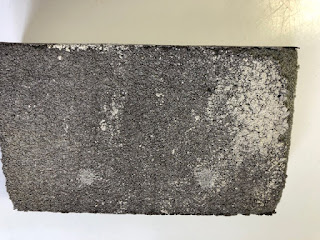


Do you have a misguided use of a database at your work? Let me know.

Monday, September 10, 2018

9/11, Emergency Management, and Gander Newfoundland

I was fortunate to meet Jake Turner, Town Manager of Gander, Newfoundland when planes coming into US east coast airspace were diverted to Gander, NL.  The Broadway hit,  Come From Away, tells the story of what happened when thousands of people descended on a town of 11,000. It takes a little license by making the mayor the center of attention when the town manager was the responsible party.  Like many small towns, the town manager is responsible for the budget, day to day functions, and recommendations to the town council. The town manager also is involved in emergency management.

As a well-functioning community, Gander had an emergency plan and had information about coordinating with the Gander Airport but, of course, not for this kind of event.  Gander NL is a little different from most of our small communities in that it has a federally managed airport with an extremely long run way, built for Canadian, English and American forces to go back and forth during WWII.  It was the closest point to Europe.  That was why all the planes were diverted to Gander. Gander hosted about 38 diverted planes.  The community and surrounding communities housed and fed about 6800 people. Today, many of those people return to Gander to visit. The airport is also a tourist location in that it has retained much of its mid-century décor.

Jake Turner was the Chief Administrative Officer of Gander Newfoundland serving for 22 years from 1991 to 2013.  Listen to what Mr. Turner had to say about that day and how the town coordinated with the many other agencies that became involved over the coming days.  


Your town’s emergency plan probably started as relatively small document coordinated by the fire department.  The fire department had to be able to handle fires, including the huge wild fires in western United States but also fires caused by trucks tipping over with unknown carcinogens.  A good emergency management plan has responsibilities listed for town officials from the town manager to the fire chief; emergency communication plans; coordination plans with county, state and federal officials, hospital and airport officials; and considers a variety of emergencies from active shooters to meth labs.  Officials may have participated in table-top exercises to run through a scenario and work out what problems they may face.  Just as hospitals have emergency exercises, some towns  actively run through a mock-up scenario with volunteers from the community participating.

Town of Gander Newfoundland
Gander Airport


Monday, August 13, 2018

Locally Grown Organic Firewood Mission


Many a time we agonize over a mission statement. We have retreats to establish our mission, vision, and values.  I think the best are to the point.  Locally grown organic firewood. It’s funny isn’t it. That was the sign on the side of the road I passed by.  It could make a pretty good mission statement.  It’s easy to turn it into a mission statement.  TO provide locally grown organic firewood. Sometimes you need to narrow it down to a particular audience and can add the preposition FOR.  To provide locally grown organic firewood for Salem or for tourists.  Add BY and you are done.  To provide locally grown organic firewood for Salem tourists by using sustainable harvesting. 

If you know someone working in a hospital, he or she can probably recite the mission.  It’s on the back of the name tag.  It might read something similar to this: To provide the best health care in Salem Hospital by specializing in big toes.  Adding the BY helps us distinguish ourselves. 
You’ve seen, “To protect and serve” and “Community Policing on police cars.  It turns into a pretty good mission statement “To protect and serve (the for is implied) Salem by using community policing techniques.
That’s how to write a mission in a nutshell.  Start with to.  If you don’t need to add the prepositional statements beginning with for or by, all the better.  Don’t get bogged down in a long one.  No one will remember it and it becomes meaningless to your employees and your clients, participants or citizens.

Tuesday, July 10, 2018

The Harangue


Source: Freedictionary.com
Have you seen the Progressive Insurance commercial with Dads’ Support Group for people who are saying and doing things their dads did?  Are you now equivalent to dad in the office?  One way you’ve become dad, that is a senior staff member, is the harangue.  You tell the history of the program, the project, when most have already heard it.  It’s true some of the new staff may not know the history and history can be important.  Staff want to move on to new programs, projects or solutions.  It just takes up a lot of time when you could be problem solving.  Millenials and GenXers, what are you seeing in the work place, vowing you’ll never say or do?  Senior staff, what are you doing that you never thought you would be doing?  Tell me about the time you…  
Are there solutions when you have someone on the way to the harangue? Sure there are.

Tactics to Challenge the Harangue

The harangue occurs when one person dominates the committee meeting, the staff meeting or just a conversation.  You’ve probably seen the Progressive Insurance commercial with the Dads’ Support Group for people who are saying and doing things their dads did?  The harangue can be interesting and useful at first, but it often takes up time, and you’ve heard it many times before.  It fails to help you solve the current problem.  Here are some things you can do.

1.  Chairs of meetings. You know the drill. Start your meeting on time and end on time.

            This works most of the time although I’ve seen the haranguer hijack meetings.  It takes a strong chair.  I chaired a meeting one time in which I suddenly jumped up and said I had to leave. I had a bus to catch.  It’s true, I did.  You might not have that extreme a need to end the meeting, but you do need to investigate questions that arose in the meeting.

2.  Attendees.  If you are an attendee to a meeting, discretely leave when the meeting should be over.  Don’t leave before the meeting is scheduled to end.

Yes, you might not want to do this if your boss is the chair, but a team meeting might be just the place.  You have to judge how others will feel about this.  Will they resent this actions and accuse you of not being a team player?

3.  Telecommuters. If the harangue is a phone conversation, dust.

            I discovered that a colleague of mine also had this tactic.  I have cleaned places I would never imagine cleaning.  The harangue sometimes contains information you do need as well as the history you’ve heard.  If someone else is home, have that person call you loudly so you can end the conversation.  Don’t use the excuse of another call on the line.  It’s rude.

4. Hallway conversations.  Continue walking. Don’t stop.  

Are there solutions if you are the one who likes to harangue.  Sorry.  We'll need to have a support group for you at work for that.

You can see the Progressive Commercial that inspired me on YouTube.
https://youtu.be/XMaIFg-gMIk


Sunday, June 3, 2018

Classics for modern public and nonprofit management

In Search of Excellence to Reinventing Government to Managing in the 21st Century

This month I introduce you to two classic management books that still have relevance to today's public and nonprofit managers.  The best companies put customer service in the forefront according to Peters and Waterman.   The way to be the best public service is to provide customer service according to Osborne and Gaebler.
Unfortunately, there is no comparable classic for the nonprofit sector.  Certainly, providing excellent service will make you a stand-out.   In Search for Excellence  has at least one other message that applies to modern nonprofits, "Stick to Your Knitting."  Many nonprofits while running for the grants are pulled away from their true missions.


Peters, Thomas and Robert Waterman (1982).  In Search of Excellence.  New York: Harper and Row.
Osborne, David and Ted Gaebler (1992). Reinventing Government. >Reading, Mass. : Addison-Wesley Pub. Co.